Key Differences Every Woman Should Know
Weightloss vs Fatloss Have you ever wondered about the difference between weightloss and fatloss? Many women use these two terms interchangeably, but they do not mean exactly the same thing.
Understanding weightloss vs fatloss is important because changes on the weighing scale do not always tell the complete story about your health and fitness.
Your body weight can change because of several factors, including water levels, muscle, food digestion and body fat.
In this blog, we will explain the difference between weightloss and fatloss, explore nutritious food choices, discuss weightloss supplements and share a balanced seven-day meal plan.
Our focus is on healthy habits, proper nutrition and long-term well-being rather than chasing a particular number on the weighing scale.
1. What Is Weightloss and How Does It Work?
Weightloss refers to a decrease in your overall body weight. Your body weight includes several components, not just body fat.
These components include:
- Body fat
- Muscle tissue
- Water
- Bones and organs
- Food and digestive contents
This means that a change in body weight does not necessarily indicate a change in body fat.
What Causes Changes in Body Weight?
Several everyday factors can influence the number you see on a weighing scale.
- Water levels: Your body naturally retains and releases water throughout the day.
- Food and digestion: The amount of food and liquid in your digestive system can temporarily affect your weight.
- Hormonal changes: Hormonal fluctuations during the menstrual cycle can influence water retention.
- Muscle changes: Muscle tissue also contributes to your overall body weight.
Therefore, one measurement cannot explain everything about your health or fitness.
2. What Is Fatloss and Why Does It Matter?
Fatloss refers specifically to a reduction in the amount of stored body fat.
Weightloss vs Fatloss Body fat is a normal and necessary part of the human body. It provides energy, protects organs and supports several important bodily functions.
The goal of healthy fitness habits should not be to eliminate body fat. Instead, the focus should be on supporting overall health through balanced nutrition, physical activity and adequate recovery.
Why Is Fatloss Different from Weightloss?
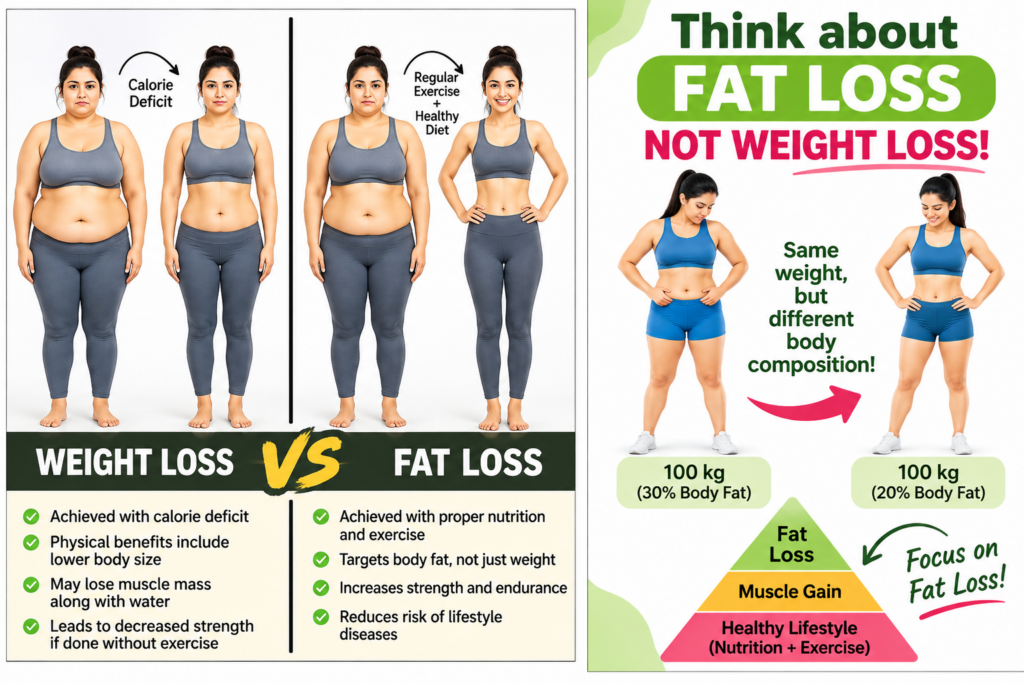
Weightloss describes a change in total body weight, whereas fatloss describes a change in one particular component of the body.
For example, changes in water levels may affect body weight without representing a meaningful change in body fat.
This is why the weighing scale should never be treated as the only measure of health or fitness progress.
3. Weightloss vs Fatloss: What Is the Difference?
Understanding weightloss vs fatloss helps explain why body weight and body composition are not the same thing.
Here is a simple comparison:
| Weightloss | Fatloss |
|---|---|
| Refers to a decrease in total body weight | Refers to a decrease in stored body fat |
| Can involve water, muscle and fat | Specifically concerns body fat |
| Can change because of temporary factors | Requires changes in body fat stores |
| Measured through changes in body weight | Assessed through body composition measurements |
| Does not explain which body component changed | Provides information about body fat changes |
Which Is More Important for Overall Health?
Neither term should be treated as a measure of personal worth or appearance.
Healthy fitness goals should consider several factors, such as:
- Energy levels throughout the day
- Strength and physical fitness
- Sleep quality
- Balanced nutrition
- General health and well-being
Remember that a healthy body is not defined by one particular number on a weighing scale.
4. Best Weightloss Foods for Women
Food plays an important role in supporting overall health and fitness. A balanced diet provides your body with the nutrients it needs to stay active, maintain energy and support normal body functions.
Instead of focusing only on low calorie foods, choose a variety of nutritious foods that provide protein, fibre, vitamins and minerals.
Low-Calorie Foods That Keep You Full
Some foods contain plenty of water and fibre, making them useful additions to balanced meals.
Here are some examples:
- Cucumber: Contains plenty of water and can be added to salads.
- Spinach: Provides fibre, vitamins and minerals.
- Broccoli: Contains fibre and several important nutrients.
- Tomatoes: Provide vitamin C and other beneficial plant compounds.
- Carrots: Contain fibre and beta-carotene.
- Watermelon: Provides water and natural sweetness.
- Papaya: Contains fibre and vitamins.
Remember, low-calorie foods are not automatically better than other foods. Your body needs a variety of foods to receive adequate nutrition.
Protein-Rich Foods to Include in Your Diet Weightloss vs Fatloss
Protein supports muscle maintenance, growth and repair. Including different protein sources in your meals can help you maintain a balanced diet.
Some nutritious vegetarian protein sources include:
- Paneer
- Milk and curd
- Lentils (dal)
- Chickpeas (chana)
- Kidney beans (rajma)
- Soybeans
- Tofu
- Nuts and seeds
Combining protein sources with whole grains and vegetables can make meals more balanced and satisfying.
Fruits and Vegetables for a Balanced Diet Weightloss vs Fatloss
Fruits and vegetables provide essential vitamins, minerals, antioxidants and fibre.
Try including different colours in your meals rather than eating only one type of fruit or vegetable.
For example, you can include apples, bananas, oranges, spinach, carrots, beetroot and seasonal vegetables.
A varied diet is more useful for overall health than depending on a few so-called weightloss foods.
5. Healthy Drinks to Support Your Fitness Goals
Many products are advertised as special weightloss drinks. However, no drink can independently guarantee fatloss.
Drinks can support hydration and contribute to a balanced daily routine.
Water and Its Importance
Water is essential for several functions in the body, including temperature regulation, digestion and nutrient transportation.
Drinking enough water throughout the day supports normal body functions.
You can also include water-rich foods such as cucumber, watermelon and oranges.
Other Healthy Drink Options Weightloss vs Fatloss
Here are some simple drink options:
- Plain water: A simple everyday hydration choice.
- Lemon water: Water with fresh lemon juice for flavour.
- Buttermilk (chaas): A traditional Indian drink that can provide calcium and protein.
- Unsweetened coconut water: Provides fluids and naturally occurring electrolytes.
- Milk: Provides protein and calcium.
- Homemade fruit smoothies: Can provide fibre and nutrients when prepared using whole fruits.
Drinks to Limit for Better Nutrition
Some drinks contain high amounts of added sugar but provide relatively few nutrients.
Examples include:
- Sugary soft drinks
- Sweetened packaged juices
- Energy drinks
- Heavily sweetened milkshakes
You do not need special detox drinks or expensive beverages to maintain good health.
6. Natural and Artificial Weightloss Supplements
Weightloss supplements are widely advertised, particularly to women who are looking for quick fitness results.
However, it is important to understand that natural and artificial weightloss supplements are not automatically safe or effective.
Supplements are not a replacement for balanced meals, proper nutrition or professional healthcare advice.
Natural Weightloss vs Fatloss Supplements for Women
Natural supplements may contain ingredients derived from plants, herbs or other natural sources.
However, the word natural does not guarantee that a product is safe.
Some herbal ingredients can interact with medicines or cause unwanted effects.
Before considering any supplement, it is important to understand its ingredients, quality, evidence and possible risks.
Artificial Weightloss Supplements: What Should Women Know?
Some commercially marketed products contain combinations of manufactured ingredients intended to influence appetite, metabolism or digestion.
Their effectiveness and safety can vary considerably.
According to the National Institutes of Health Office of Dietary Supplements, scientific evidence supporting many weight-loss supplement ingredients is limited. Some products can also interact with medicines or cause harmful effects.
You can read more in the NIH’s Dietary Supplements for Weight Loss fact sheet.
Possible Side Effects and Safety Considerations Weightloss vs Fatloss
Some weightloss supplements may cause:
- Digestive discomfort
- Sleep disturbances
- Increased heart rate
- Changes in blood pressure
- Interactions with certain medicines
Never start a weightloss supplement simply because it is popular on social media or recommended by an influencer.
This is particularly important for teenagers, pregnant women and people with existing health conditions. Professional medical advice should always come before supplement use.
Do Women Really Need Weightloss Supplements?
No supplement is necessary for everyone.
Most people can support their nutritional needs through a varied and balanced diet. Supplements may be useful in certain situations, such as when a healthcare professional identifies a nutritional deficiency.
The best approach is to understand your individual nutritional requirements rather than depend on products promising quick results.
7. A Balanced 7-Day Diet Plan for Weightloss vs Fatloss
A balanced meal routine can help women develop healthy eating habits and receive a variety of nutrients.
The following seven-day plan is an example of balanced Indian vegetarian meal choices. It is intended as meal inspiration, not a restrictive weightloss prescription.
Meals and portions should be adjusted according to individual needs, preferences, activity levels and medical requirements.
Day 1: Balanced Nutrition
Monday
- Breakfast: Vegetable poha with curd.
- Mid-morning: Seasonal fruit.
- Lunch: Roti, dal, mixed vegetables and salad.
- Evening: Roasted chana and milk.
- Dinner: Vegetable khichdi with curd.
Day 2: Protein-Rich Choices
Tuesday
- Breakfast: Besan chilla with paneer filling.
- Mid-morning: Apple or guava.
- Lunch: Rajma, rice and cucumber salad.
- Evening: Fruit and nuts.
- Dinner: Roti, paneer curry and vegetables.
Day 3: Fruits and Vegetables
Wednesday
- Breakfast: Vegetable upma with milk.
- Mid-morning: Papaya.
- Lunch: Roti, chana dal and seasonal vegetables.
- Evening: Buttermilk and roasted makhana.
- Dinner: Vegetable pulao with raita.
Day 4: Variety in Meals
Thursday
- Breakfast: Idli with sambar.
- Mid-morning: Banana.
- Lunch: Roti, mixed dal and vegetable sabzi.
- Evening: Sprouts chaat.
- Dinner: Paneer bhurji, roti and salad.
Day 5: Whole Grains and Protein
Friday
- Breakfast: Vegetable stuffed paratha with curd.
- Mid-morning: Orange.
- Lunch: Brown rice, dal and vegetables.
- Evening: Homemade smoothie.
- Dinner: Roti, soyabean curry and salad.
Day 6: Balanced Food Combinations
Saturday
- Breakfast: Oats with milk, nuts and fruit.
- Mid-morning: Seasonal fruit.
- Lunch: Vegetable khichdi with curd.
- Evening: Roasted chana and buttermilk.
- Dinner: Roti, dal and mixed vegetable sabzi.
Day 7: Healthy Eating Habits
Sunday
- Breakfast: Paneer sandwich with milk.
- Mid-morning: Watermelon.
- Lunch: Roti, rajma and salad.
- Evening: Makhana and fruit.
- Dinner: Vegetable dalia with curd.
Important Tips for Following a Balanced Meal Plan
- Include different food groups in your daily meals.
- Do not skip meals to compensate for what you have eaten.
- Include protein-rich foods regularly.
- Drink water throughout the day.
- Enjoy your favourite foods as part of a balanced routine.
- Adjust your meals according to your nutritional needs.
There is no single seven-day diet plan that works for every woman. Individual requirements can differ depending on age, activity, health and lifestyle.
8.
Tips for Supporting Healthy Weightloss vs Fatloss
Along with balanced nutrition, everyday habits play an important role in overall fitness.
Include Regular Physical Activity
Physical activity supports heart health, muscle strength, bone health and mental well-being.
You can choose activities you enjoy, such as:
- Walking
- Dancing
- Cycling
- Swimming
- Yoga
- Strength-based exercises appropriate for your fitness level
According to the World Health Organization, regular physical activity provides important physical and mental health benefits. Read its Physical Activity Guidelines for more information.
Prioritise Sleep and Recovery
Sleep gives your body time to recover and supports several important functions.
Try to maintain a consistent sleeping routine and give your body enough rest.
Build Sustainable Eating Habits
Healthy eating does not mean avoiding your favourite foods or following strict food rules.
Instead:
- Eat a variety of nutritious foods.
- Include fruits and vegetables.
- Enjoy regular, balanced meals.
- Pay attention to hunger and fullness.
- Avoid comparing your progress with other people.
Small, consistent habits can support long-term health and well-being.
9. Frequently Asked Questions (FAQs)
1. What is the main difference between weightloss and fatloss?
Weightloss refers to a decrease in total body weight, while fatloss specifically refers to a reduction in stored body fat. Both describe different changes in the body.
2. Can you lose fat without losing weight?
Changes in body composition can happen without a major change in total body weight. For example, changes in muscle and fat levels can influence body composition differently.
3. Which foods support healthy weight management Weightloss vs Fatloss ?
Fruits, vegetables, whole grains, lentils, beans, paneer, nuts and seeds can all contribute to a balanced diet.
4. Are weightloss supplements necessary for women?
No. Weightloss supplements are not necessary for everyone. Some may have limited evidence of effectiveness and potential safety concerns.
5. Are homemade drinks enough to support fatloss?
Homemade drinks can support hydration and provide nutrients, but no particular drink independently guarantees fatloss.
6. Is a seven-day diet plan suitable for everyone?
No. Nutritional needs differ from person to person. A meal plan should be adjusted according to individual health, age, lifestyle and nutritional requirements.
10. Conclusion: Weightloss vs Fatloss
Understanding weightloss vs fatloss helps women make more informed decisions about their health and fitness.
Weightloss refers to changes in total body weight, whereas fatloss focuses specifically on body fat. Neither should be judged through the weighing scale alone.
A balanced diet, nutritious foods, regular physical activity, sufficient sleep and sustainable daily habits all contribute to better overall well-being.
Remember that every individual has different nutritional and fitness needs. Avoid following extreme diet trends or relying on supplements that promise unrealistic results.
If you are looking for professional guidance, Swasth Fitness can help you explore personalised nutrition and fitness support based on your individual needs.
Ready to take a step towards better health?
Visit Swasth Fitness to explore our services and get in touch with us for personalised guidance.