
When people decide to become healthier, one of the first things they usually do is step on a weighing scale.
The number goes up or down, and we immediately assume that it tells us whether we are getting fitter.
But here’s something important to understand:
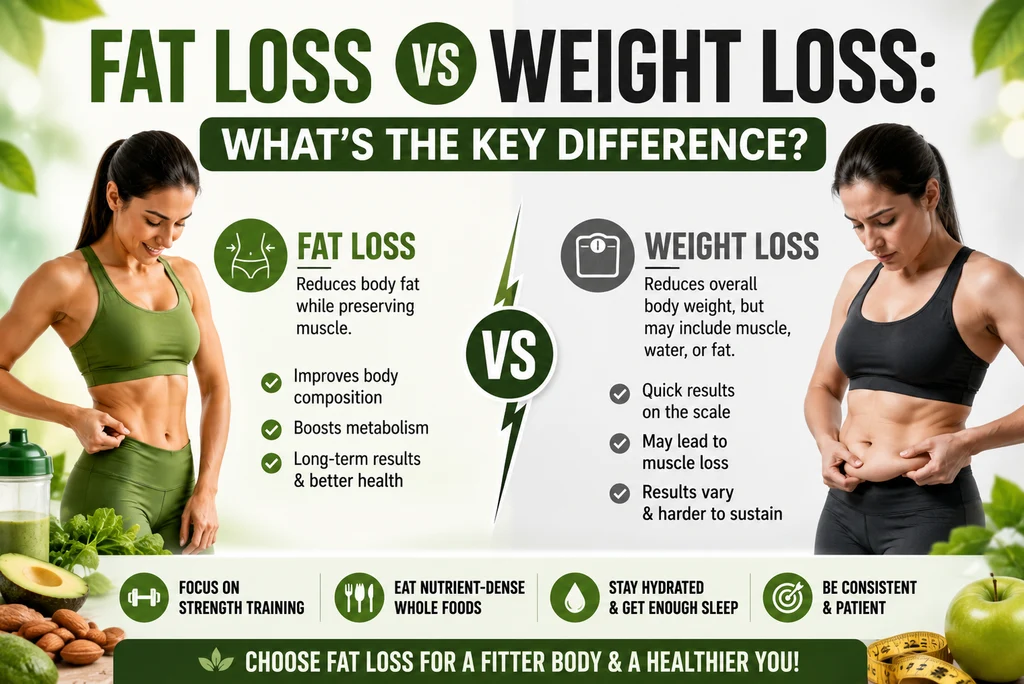
Weight loss and fat loss are not exactly the same thing.
You can lose weight without losing a significant amount of body fat. Similarly, your body composition can improve even when the number on the weighing scale changes very little.
Understanding this difference can completely change the way you look at your fitness journey.
If your goal is to become healthier, stronger, and fitter, focusing only on your body weight may not give you the complete picture.
So, what exactly is the difference between weight loss and fat loss?
Let’s understand it step by step.
What Does “Weight Loss” Actually Mean?
Your body weight is made up of much more than body fat.
It includes:
- Muscle
- Body fat
- Water
- Bones
- Organs
- Glycogen
- Food and waste within your digestive system
Therefore, when the number on the weighing scale decreases, it doesn’t automatically mean that you have lost body fat.
For example, if someone loses several kilograms quickly after drastically reducing their food intake, part of that initial change may come from water and glycogen, along with some fat and potentially muscle.
This is one reason why rapid changes on the scale don’t always represent the kind of progress people are looking for.
What Is Fat Loss?
Fat loss means reducing the amount of body fat you carry.
This is different from simply making your body lighter.
For many people, the goal isn’t necessarily to become as light as possible. Instead, they want to improve their body composition, become stronger, feel healthier, and reduce excess body fat while maintaining as much muscle as reasonably possible.
This is where a combination of nutrition and fitness becomes important.
A sustainable approach generally focuses on creating healthy eating habits, staying physically active, incorporating appropriate strength training, getting adequate recovery, and maintaining consistency over time.
Weight Loss vs Fat Loss: The Key Difference
Here’s a simple way to think about it:
Weight loss = decrease in total body weight.
Fat loss = decrease in body fat.
The weighing scale measures your total body weight.
It doesn’t tell you exactly how much of that change came from fat, muscle, water, or other components.
That’s why two people can lose the same amount of weight but experience very different changes in their bodies.
Why Does Body Weight Change So Often?
Have you ever weighed yourself one morning and noticed that your weight was different the next day?
Don’t panic.
Daily changes in body weight are completely normal.
Your weight can be influenced by factors such as:
Water
Changes in hydration and fluid retention can affect your scale weight.
Food
The amount of food and fluid currently in your digestive system can temporarily affect your weight.
Carbohydrate Intake
Your body stores carbohydrates as glycogen, and glycogen is stored along with water. Changes in carbohydrate intake can therefore influence scale weight.
Sodium
Changes in sodium intake can influence fluid balance and temporarily affect your weight.
Exercise
A new or particularly challenging workout can cause temporary changes in fluid balance.
Hormonal Changes
Hormonal fluctuations can influence water retention and body weight.
For women in particular, weight may naturally fluctuate at different points during the menstrual cycle.
This means that one weigh-in doesn’t tell the whole story.
Does Losing Weight Always Mean Losing Fat?
No.
This is one of the most important concepts to understand.
Imagine someone dramatically reduces their food intake and begins losing weight quickly.
The scale may show a significant decrease, but the change may include a combination of:
- Water
- Glycogen
- Body fat
- Muscle tissue
- Digestive contents
This is why extremely restrictive diets can sometimes produce quick changes on the scale without necessarily producing the body-composition changes someone actually wants.
The goal shouldn’t simply be:
“How quickly can I make the number smaller?”
A better question is:
“How can I improve my health and body composition sustainably?”
Why Is Muscle Important?
Muscle plays an important role in movement, strength, physical function, and overall health.
If someone is trying to reduce body fat, preserving muscle can be an important part of the process.
This is one reason strength training can be valuable.
Resistance exercises challenge your muscles and can help support muscle strength and maintenance when combined with appropriate nutrition.
Examples include:
- Squats
- Lunges
- Push-ups
- Rows
- Resistance-band exercises
- Dumbbell exercises
- Other forms of resistance training
You don’t necessarily need to lift extremely heavy weights to begin.
Beginners can start with appropriate bodyweight or light resistance exercises and gradually progress.
Can You Lose Fat Without Losing Weight?
Yes, it can happen.
This is sometimes referred to as body recomposition.
For example, someone may lose some body fat while gaining or maintaining muscle.
The result could be:
Less body fat + similar body weight + more muscle
In that situation, the weighing scale may barely change, but the person’s body composition, strength, fitness, and appearance may improve.
This is another reason why the scale shouldn’t be your only measurement of progress.
How Does Nutrition Support Fat Loss?
Nutrition plays an important role in managing body composition.
A sustainable approach generally focuses on your overall eating pattern rather than one specific food.
Some useful principles include:
1. Eat Enough Protein
Protein provides amino acids needed for many functions in the body and supports muscle maintenance and repair.
Good sources include:
- Eggs
- Milk
- Curd
- Paneer
- Tofu
- Dal
- Beans
- Chickpeas
- Fish
- Chicken
- Other suitable protein-rich foods
2. Include Vegetables and Fruits
Vegetables and fruits provide vitamins, minerals, fiber, and other beneficial compounds.
Try including a variety of colors and types throughout your meals.
3. Choose Mostly Nutrient-Dense Foods
Foods such as whole grains, vegetables, fruits, legumes, lean protein sources, nuts, seeds, and other minimally processed foods can form the foundation of a balanced diet.
4. Be Mindful of Portions
Even nutritious foods provide calories.
Learning appropriate portion sizes can help you build a balanced diet without unnecessarily eliminating foods.
What Role Does Exercise Play in Fat Loss?
Exercise can support fat loss and overall health, but you don’t need to exercise for hours every day.
A combination of different forms of movement can be useful.
Strength Training
Strength training can help you build and maintain muscle.
Cardio
Activities such as walking, cycling, swimming, dancing, or jogging can improve cardiovascular fitness and increase energy expenditure.
Everyday Movement
Don’t underestimate simple activities such as:
- Walking
- Taking the stairs
- Household activities
- Standing regularly
- Moving throughout the day
Fitness isn’t limited to what happens during a formal workout.
Your overall activity level matters too.
Why Crash Diets Can Be Misleading
Many people are attracted to diets promising dramatic results in a very short period.
You may see claims such as:
“Lose 5 kg in 7 days!”
These claims can sound appealing, but rapid changes in body weight aren’t necessarily the same as sustainable fat loss.
Extreme restriction can also make it difficult to meet your nutritional needs and maintain the approach long term.
A healthier mindset is to focus on gradual, sustainable progress.
Your body doesn’t need to transform overnight.
How Should You Measure Progress?
If you’re working toward better fitness or body composition, consider using multiple indicators.
1. Body Weight
You can track your weight, but look at longer-term trends rather than reacting to every daily fluctuation.
2. Measurements
Tracking measurements such as waist circumference over time can provide additional information.
3. Progress Photos
Taking photos under similar conditions can help you notice changes that aren’t obvious from the scale.
4. Strength
Can you perform more repetitions?
Can you lift more?
Can you perform an exercise with better form?
These can be meaningful signs of progress.
5. Fitness
Maybe you can walk longer, climb stairs more easily, or complete a workout without becoming as tired.
6. How You Feel
More energy, improved confidence, better movement, and greater consistency can all be valuable indicators.
What About the BMI?
BMI, or Body Mass Index, is a screening measure based on height and weight.
It can be useful in certain contexts, but it doesn’t directly measure body fat or distinguish between muscle and fat.
For example, someone with more muscle mass may have a higher BMI without having excess body fat.
This is another reason why a single number should not define your entire fitness journey.
Should You Stop Using the Weighing Scale?
Not necessarily.
A weighing scale can still be a useful tool.
The problem occurs when we treat it as the only measure of success.
If you choose to weigh yourself, try to be consistent with the conditions—for example, weighing at a similar time of day and under similar circumstances.
More importantly, look at trends over time rather than becoming emotionally attached to individual numbers.
A Better Approach to Fat Loss
If your goal is to reduce excess body fat, think about building a complete lifestyle rather than searching for a quick solution.
Focus on:
Balanced Nutrition
Build meals around nutritious foods and appropriate portions.
Regular Exercise
Combine strength training, cardio, and everyday movement.
Adequate Protein
Include protein-rich foods regularly.
Quality Sleep
Give your body enough opportunity to recover.
Stress Management
Find healthy ways to manage everyday stress.
Consistency
Follow your healthy habits regularly instead of trying to be perfect.
Common Myths About Weight and Fat Loss
Myth 1: “If the scale isn’t moving, I’m not making progress.”
Not necessarily.
You may be improving your fitness, gaining muscle, losing fat, or experiencing changes in body composition.
Myth 2: “Eating less is always better.”
Too much restriction can make it difficult to maintain a healthy and balanced diet.
The goal is not simply to eat as little as possible.
Myth 3: “Cardio is the only exercise needed for fat loss.”
Cardio can be valuable, but strength training and everyday movement can also play important roles.
Myth 4: “You need to completely avoid carbohydrates.”
Carbohydrates are an important source of energy and can be part of a balanced diet.
The quality and quantity of your overall diet matter more than labeling an entire nutrient group as “bad.”
Myth 5: “Fast weight loss means better results.”
Faster isn’t always better.
Sustainable progress is often more valuable than dramatic short-term changes.
The Bottom Line
Weight loss and fat loss are related, but they are not the same thing.
Weight loss refers to a decrease in your overall body weight, while fat loss specifically refers to reducing body fat.
Your weight can change because of water, glycogen, food, muscle, and fat. That’s why focusing only on the weighing scale can sometimes create an inaccurate picture of your progress.
If your goal is to become healthier and fitter, focus on the bigger picture:
Eat balanced meals.
Move regularly.
Include strength training.
Get enough protein.
Prioritize recovery.
Manage stress.
Stay consistent.
And remember that your fitness journey isn’t a race.
You don’t need to lose the maximum amount of weight in the shortest possible time.
You need to build habits that support your health and wellness for the long term.
At SwasthFitness, we believe that real fitness goes beyond a number on the weighing scale. It’s about bringing together Nutrition. Fitness. Wellness. to create a healthier and more sustainable lifestyle.
Don’t just chase a smaller number. Build a stronger, healthier you.