
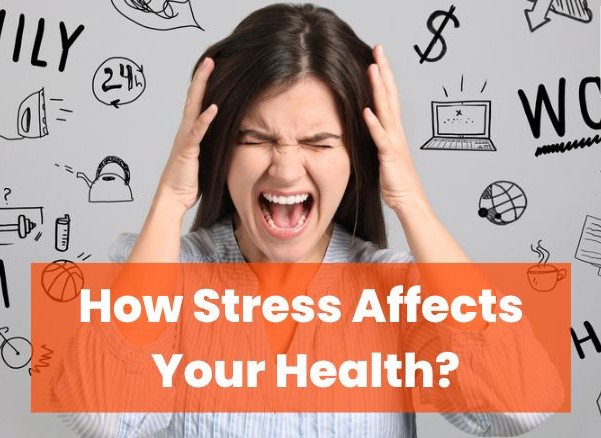
Stress is a normal part of life. We all experience it from time to time—because of work, studies, family responsibilities, money, relationships, lack of sleep, or simply having too much to do.
A little stress isn’t necessarily a bad thing. In some situations, it can help you stay focused and respond quickly to a challenge. The problem begins when stress becomes frequent or continues for a long time without enough rest and recovery.
Long-term stress can affect your sleep, appetite, energy, exercise routine, recovery, and overall well-being. It can even make it harder to maintain the healthy habits you’re working so hard to build.
That’s why fitness isn’t only about workouts and food. Your mental well-being matters too.
In this article, let’s understand how stress can affect your health and fitness and what you can do to manage it in a simple, practical way.
What Is Stress?
Stress is your body’s natural response to a challenging or demanding situation.
Imagine you have an important presentation tomorrow. You may feel nervous, your heart may beat faster, and you may find yourself thinking about the presentation repeatedly.
That’s your body’s stress response.
When you’re under stress, your body releases hormones that prepare you to deal with the situation. Your heart rate and breathing can increase, your muscles may become tense, and you may feel more alert. This is sometimes called the “fight-or-flight” response.
This response can be useful for a short period.
But if you feel stressed day after day, your body may not get enough opportunity to relax and recover.
That’s when stress can start affecting your health.
How Can Stress Affect Your Health?
Stress doesn’t only affect your thoughts or mood. It can also show up in your body and daily habits.
You might notice:
- Difficulty sleeping
- Feeling tired throughout the day
- Headaches
- Muscle tension
- Changes in appetite
- Difficulty concentrating
- Feeling irritated or overwhelmed
- Less motivation to exercise
- Eating more or less than usual
Long-term stress can contribute to a range of physical and mental health problems, including sleep difficulties, digestive problems, headaches, anxiety, and other health concerns.
But let’s look specifically at how stress can affect your fitness journey.
1. Stress Can Affect Your Sleep
One of the first things many people notice when they’re stressed is poor sleep.
You may go to bed physically tired but find that your mind is still active.
You might think:
“Did I finish everything at work?”
“What do I need to do tomorrow?”
“How am I going to manage everything?”
Before you know it, you’ve spent an hour worrying instead of sleeping.
And poor sleep can make the next day harder.
You may feel tired, less focused, and less motivated to exercise. You may also find it harder to make healthy food choices.
Stress and sleep can therefore create a frustrating cycle:
Stress → Poor sleep → Low energy → Less healthy habits → More stress
Getting enough sleep is an important part of taking care of your physical and mental health. The CDC recommends that adults generally get 7 or more hours of sleep each night.
2. Stress Can Affect Your Eating Habits
Have you ever had a stressful day and suddenly found yourself reaching for biscuits, chips, sweets, or other comfort foods?
You’re not alone.
Stress can affect appetite and eating behavior. Some people eat less when they’re stressed, while others eat more or snack more often.
Sometimes food becomes a way of taking a short break from difficult emotions.
For example:
Long day at work → Feeling stressed → Reaching for a snack → Temporary comfort
There’s nothing wrong with enjoying your favorite food occasionally.
The problem is when eating becomes your main way of dealing with stress.
This can make it harder to follow your normal eating routine and may interfere with your fitness or weight-management goals.
3. Stress Can Lead to Unnecessary Snacking
Stress can sometimes make it difficult to recognize the difference between physical hunger and emotional hunger.
Physical hunger usually develops gradually. You may feel hungry and be happy to eat a normal meal.
Emotional hunger can appear suddenly.
For example, you might have just eaten dinner but still feel like eating something because you’re bored, upset, tired, or stressed.
Before reaching for a snack, try asking yourself:
“Am I actually hungry, or am I stressed?”
If you’re hungry, eat. There’s no need to feel guilty about it.
But if you’re not physically hungry, try addressing the stress first.
You could:
- Take a short walk
- Drink some water
- Step outside
- Call a friend
- Listen to music
- Take a few slow breaths
- Stretch for five minutes
- Take a short break from your screen
These small actions can help you become more aware of your eating habits.
4. Stress Can Reduce Your Motivation to Exercise
You already know that exercise is good for you.
But knowing that doesn’t mean you’ll always feel motivated to work out.
After a stressful day, even changing into workout clothes can feel like a lot of effort.
You might tell yourself:
“I’ll exercise tomorrow.”
Then tomorrow becomes the next day.
And eventually, your exercise routine disappears.
This is why you shouldn’t depend entirely on motivation.
Instead, make your fitness routine simple enough to continue even when life gets busy.
You don’t have to complete a one-hour workout every time.
On a difficult day, you could:
- Walk for 20 minutes
- Do a short home workout
- Stretch for 10 minutes
- Practice yoga
- Do a few basic strength exercises
- Take the stairs
- Go for an easy cycle ride
Something is often better than nothing.
The goal isn’t to be perfect.
The goal is to keep moving.
5. Stress Can Make Exercise Feel Harder
Have you ever had a day when your normal workout suddenly felt much harder?
Stress may be one of the reasons.
If you’re mentally exhausted, sleeping poorly, or dealing with a lot of pressure, your workout may not feel as enjoyable or comfortable as usual.
You might have less energy and concentration.
That’s okay.
One difficult workout doesn’t mean you’ve lost your fitness.
Sometimes your body simply needs less pressure and more recovery.
Instead of forcing yourself through an intense workout, consider reducing the intensity or choosing a lighter activity.
Learning to listen to your body is an important part of building a sustainable fitness routine.
6. Stress Can Affect Your Recovery
Exercise places a demand on your body.
That’s a good thing when it’s balanced with proper nutrition and recovery.
Your body needs time to recover after physical activity. Sleep, rest, food, hydration, and stress management all play a role in your overall recovery.
If you’re exercising hard while also dealing with high levels of stress and poor sleep, you may feel constantly tired.
This is why rest is not a sign of laziness.
Rest is part of fitness.
Think of your fitness routine as:
Exercise + Nutrition + Sleep + Recovery
Not:
Exercise + Exercise + Exercise
Your body needs both challenge and recovery.
7. Stress Can Make Healthy Habits More Difficult
This is one of the biggest reasons stress matters for fitness.
When life becomes stressful, healthy habits are often the first things we stop doing.
You may:
- Skip breakfast
- Order fast food because you don’t have time to cook
- Stop exercising
- Sleep late
- Drink less water
- Snack more frequently
- Spend more time sitting
- Stop preparing meals
- Give up on your routine altogether
None of these things makes you a “failure.”
It simply means your routine may be too difficult to maintain during stressful periods.
Instead of trying to be perfect, create a minimum healthy routine.
For example:
10–20 minutes of movement + one balanced meal + enough water + a reasonable bedtime
Even when your schedule is difficult, these small habits can help you stay connected to your health goals.
Can Stress Affect Weight?
Stress and weight are connected, but it’s important not to oversimplify the relationship.
Stress can influence appetite, eating behavior, sleep, physical activity, and other habits that affect body weight.
For some people, stress may lead to eating more. For others, it may reduce their appetite.
Poor sleep can also make healthy eating and regular exercise more difficult.
So if you’re trying to lose weight, don’t focus only on:
“How many calories did I eat?”
Also consider:
“How well am I sleeping?”
“How stressed am I?”
“Am I recovering properly?”
“Am I exercising consistently?”
“Am I eating because I’m hungry or because I’m stressed?”
Weight management is influenced by many factors, and building healthy habits is generally more useful than looking for one single cause or solution.
8. Exercise Can Also Help Manage Stress
Here’s the positive side:
Movement can be part of your stress-management routine.
Regular physical activity can support both physical and emotional well-being. Even something as simple as walking can be useful.
And you don’t need to choose the most difficult workout.
Choose something you actually enjoy.
It could be:
- Walking
- Dancing
- Yoga
- Strength training
- Cycling
- Swimming
- Running
- Pilates
- Playing a sport
The best exercise isn’t necessarily the exercise that burns the most calories.
It’s the exercise you can enjoy and continue doing regularly.
9. Make Time for Yourself
When you’re busy, taking time for yourself can feel unnecessary.
But it isn’t.
Your day doesn’t have to be completely filled with work and responsibilities.
Try creating small moments where you can relax.
For example:
Morning
Take five minutes to sit quietly before starting your day.
During work
Stand up, stretch, or walk for a few minutes.
Evening
Put your phone away for some time and do something relaxing.
Weekend
Go for a walk, meet friends, spend time with family, or do something you genuinely enjoy.
The CDC also recommends strategies such as taking breaks, being active, connecting with others, getting enough sleep, and making time to relax as healthy ways to manage stress.
10. Don’t Try to Fix Everything at Once
When people decide to become healthier, they sometimes try to change everything on the same day.
They start a strict diet.
They exercise every day.
They stop eating their favorite foods.
They wake up at 5 a.m.
They drink large amounts of water.
They completely change their schedule.
And after a few days, they feel exhausted and quit.
Instead, start small.
Choose one or two habits first.
For example:
Week 1: Walk for 20 minutes, five days a week.
Week 2: Add more vegetables and protein to your meals.
Week 3: Work on a consistent bedtime.
Week 4: Add strength training.
Small changes may feel less exciting than an extreme transformation, but they’re often much easier to maintain.
Simple Ways to Manage Stress Every Day
You don’t need a complicated stress-management program.
Start with the basics.
Get enough sleep
Try to maintain a consistent sleep and wake schedule.
Move your body
A walk, workout, stretch, or other physical activity can help.
Eat regular, balanced meals
Don’t let a stressful day turn into an entire day of skipping meals or constantly snacking.
Take short breaks
You don’t have to work continuously for hours without stopping.
Stay connected
Talk to people you trust. Social connection can be an important part of managing stress.
Practice slow breathing
Take a few slow, comfortable breaths when you feel overwhelmed.
Spend time outdoors
A short walk outside can give you a mental break from your usual environment.
Give yourself some flexibility
One unhealthy meal or missed workout doesn’t ruin your progress.
Simply return to your routine at the next opportunity.
What If You’re Feeling Stressed All the Time?
Everyone experiences stressful periods.
But if stress feels constant, overwhelming, or difficult to manage, don’t ignore it.
Long-term stress can affect both mental and physical well-being.
If stress is significantly affecting your daily life, sleep, eating habits, relationships, work, or ability to cope, consider speaking with a qualified healthcare or mental-health professional.
Asking for help isn’t a weakness.
Taking care of your mental health is part of taking care of your overall health.
The Bottom Line
Your health isn’t determined by your workouts alone.
It’s also influenced by how you sleep, eat, recover, manage stress, and live your everyday life.
If you’re trying to become fitter or healthier, don’t focus only on exercise and food. Pay attention to your stress levels too.
You don’t need to eliminate stress completely. That’s not realistic.
Instead, learn to recognize when you’re under too much pressure and give your body and mind opportunities to recover.
Remember:
A healthy lifestyle isn’t about doing everything perfectly. It’s about building habits that support you—even when life gets busy.
At SwasthFitness, we believe that fitness is more than just exercise. It’s about bringing nutrition, fitness, and wellness together to create healthier and more sustainable habits.
Take care of your body. Take care of your mind. And give yourself time to recover.
Because becoming healthier isn’t just about working harder.
It’s also about learning when to slow down.