
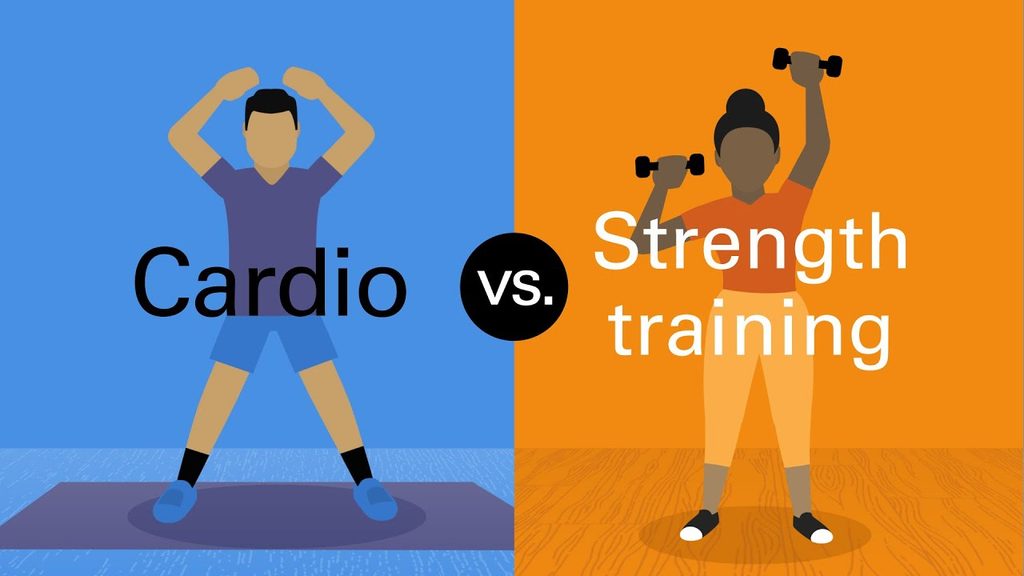
When it comes to fitness, people often ask the same question:
“Should I do cardio or strength training?”
You may have heard that cardio is best for losing weight, while strength training is better for building muscle. You may also have seen people spending hours on treadmills or others lifting weights in the gym.
So, which one is actually better?
The simple answer is:
Neither is automatically better. Cardio and strength training do different things, and both can be valuable for your health and fitness.
The right choice depends on your goals, your current fitness level, what you enjoy, and what you can do consistently.
For many people, the best approach isn’t choosing one and completely ignoring the other. A balanced fitness routine can include both cardio and strength training.
In this article, we’ll explain the difference between the two in simple terms and help you understand how each can fit into your fitness journey.
What Is Cardio?
Cardio, short for cardiovascular exercise, is physical activity that makes your heart beat faster and keeps you moving for a period of time.
Common examples include:
- Walking
- Jogging
- Running
- Cycling
- Swimming
- Dancing
- Skipping
- Hiking
- Aerobic classes
- Stair climbing
You don’t necessarily need a gym to do cardio.
A brisk walk around your neighborhood can be cardio. Dancing at home can be cardio. Cycling to a nearby place can also count.
The important thing is that you’re moving your body and challenging your heart and lungs.
What Is Strength Training?
Strength training is exercise where you work your muscles against some form of resistance.
That resistance can come from:
- Dumbbells
- Barbells
- Resistance bands
- Weight machines
- Kettlebells
- Your own body weight
Exercises such as squats, lunges, push-ups, rows, shoulder presses, and deadlifts are examples of strength-training movements.
And strength training isn’t only for people who want big muscles.
It can help you become stronger, more capable, and more physically independent in everyday life.
Think about activities such as carrying grocery bags, climbing stairs, lifting a suitcase, getting up from a chair, or playing with your children.
Strength matters for all of these things.
Cardio vs Strength Training: The Main Difference
A simple way to understand the difference is:
Cardio focuses more on your heart and endurance.
It helps train your body to perform activities for longer periods.
Strength training focuses more on your muscles and strength.
It helps your muscles handle resistance and become stronger over time.
But this doesn’t mean they work completely separately.
Both forms of exercise can support your overall health and fitness.
Benefits of Cardio
Cardio has several important benefits.
1. It Supports Heart Health
Your heart is a muscle, and regular physical activity helps keep your cardiovascular system working efficiently.
Activities such as brisk walking, cycling, swimming, and running can help improve your cardiovascular fitness.
You don’t have to run a marathon to benefit.
Even regular moderate activity can be valuable.
2. Cardio Can Improve Your Endurance
Have you ever climbed several flights of stairs and felt completely out of breath?
As your cardiovascular fitness improves, everyday physical activities may become easier.
You may be able to:
- Walk farther
- Climb stairs more comfortably
- Exercise for longer
- Recover more quickly after activity
- Participate in sports or recreational activities with more energy
That’s one of the biggest benefits of cardio.
It helps your body become better at sustained activity.
3. Cardio Can Help With Weight Management
Cardio uses energy, and regular physical activity can contribute to managing body weight when combined with appropriate nutrition and other healthy habits.
But there’s an important point here:
Cardio isn’t a magic solution for weight loss.
You don’t need to spend hours running on a treadmill to become healthier.
Your overall lifestyle matters much more than one particular exercise.
Your nutrition, sleep, daily movement, stress levels, and consistency all play a role.
4. Cardio Can Be Enjoyable
Cardio doesn’t have to mean boring treadmill sessions.
You can choose something you enjoy.
Maybe you love dancing.
Maybe you enjoy walking outdoors.
Maybe cycling makes you feel good.
Maybe you enjoy swimming.
When you choose an activity you actually like, you’re more likely to keep doing it.
And consistency is extremely important.
Benefits of Strength Training
Now let’s look at the other side.
1. It Helps Build Strength
This is the most obvious benefit.
When you regularly challenge your muscles with appropriate resistance, your body can adapt and become stronger.
You may notice that activities that once felt difficult become easier.
For example:
At first, carrying two grocery bags might feel difficult.
After building your strength, those same bags may feel much easier.
That’s real progress—even if the number on the weighing scale hasn’t changed.
2. It Helps Build and Maintain Muscle
Muscle is important throughout life.
As people get older, maintaining muscle strength becomes increasingly important for everyday movement and independence.
Strength training can help support muscle mass and physical function when performed consistently.
And you don’t need to become a bodybuilder.
The goal can simply be:
“I want to become stronger and feel more capable.”
That’s a great fitness goal.
3. Strength Training Can Improve Your Body Composition
Here’s an important distinction.
Body weight and body composition are not the same thing.
Your body weight is simply how much you weigh.
Body composition refers to what your body is made up of, including muscle and fat.
Two people can weigh the same but have very different amounts of muscle and fat.
This is one reason why focusing only on the weighing scale can sometimes be misleading.
Strength training can help you build and maintain muscle while you’re working toward a healthier body composition.
4. It Supports Strong Bones and Joints
Resistance exercise places an appropriate amount of stress on your bones and muscles, which can support bone health and physical function.
Strong muscles also help you perform everyday movements with greater confidence.
This is especially important as we age.
Fitness shouldn’t only be about how you look.
It should also be about what your body can do.
So, Which Is Better for Weight Loss?
This is probably the question most people really want answered.
Cardio vs strength training for weight loss—which wins?
The answer isn’t as simple as choosing one.
Weight loss primarily depends on maintaining a calorie deficit over time, meaning your body uses more energy than it receives from food. However, weight management is influenced by many factors, and exercise is only one part of the picture.
Cardio can increase your energy expenditure.
Strength training can help maintain or build muscle.
And nutrition plays a major role in determining your overall calorie intake.
So instead of thinking:
Cardio OR strength training
think:
Nutrition + cardio + strength training + daily movement + sleep + recovery
That’s a much more complete approach.
What If Your Goal Is to Look More Toned?
You may have heard someone say:
“I don’t want to build muscle. I just want to get toned.”
Here’s something important to understand.
“Toning” isn’t a special type of exercise.
When people say they want to look toned, they usually mean they want more visible muscle definition and less body fat.
Strength training can help develop your muscles, while nutrition and overall activity can help with managing body fat.
That’s why a combination of strength training and appropriate nutrition can be useful for someone who wants a more defined appearance.
And no, lifting weights doesn’t automatically make you bulky.
Building a large amount of muscle generally requires significant training, nutrition, and time.
What If You Are a Beginner?
If you’re new to exercise, don’t feel like you need to immediately start an intense workout routine.
Start with activities that feel manageable.
For example:
Cardio
Try:
- 20–30 minutes of brisk walking
- Easy cycling
- Beginner dance workouts
- Swimming
Strength
Try basic movements such as:
- Bodyweight squats
- Wall push-ups
- Glute bridges
- Lunges
- Light resistance-band exercises
Start at a level that allows you to learn proper movement and gradually increase the challenge.
You don’t need to destroy yourself in your first workout.
Fitness is a process.
Can You Do Cardio and Strength Training Together?
Absolutely.
In fact, for many people, combining the two can create a well-rounded fitness routine.
For example:
Monday: Strength training
Tuesday: Brisk walking
Wednesday: Strength training
Thursday: Easy cardio
Friday: Strength training
Saturday: Walk, cycle, dance, or another enjoyable activity
Sunday: Rest or gentle movement
This is only an example.
Your ideal schedule will depend on your fitness level, goals, available time, and recovery needs.
You don’t have to follow this exact routine.
What If You Have Very Little Time?
This is where many people get stuck.
They think:
“If I can’t exercise for one hour, there’s no point.”
That’s not true.
A shorter workout can still be useful.
If you have 20 minutes, you could:
Option 1: Cardio
Take a brisk 20-minute walk.
Option 2: Strength
Do a short full-body routine with squats, push-ups, glute bridges, and rows using resistance bands or appropriate weights.
Option 3: Combination
10 minutes of brisk walking + 10 minutes of strength exercises.
The goal is not to find the perfect workout.
The goal is to make movement fit into your real life.
Which One Should You Do More?
There’s no universal answer.
Ask yourself what you’re trying to improve.
If you want better endurance:
Include more cardio.
If you want to become stronger:
Prioritize strength training.
If you want to support healthy weight management:
Focus on nutrition while combining cardio, strength training, and regular daily movement.
If you want better overall fitness:
Include both.
If you simply want to become healthier:
Choose activities you enjoy and can do consistently.
Don’t Forget About Daily Movement
Your workout isn’t the only movement that matters.
Think about everything you do throughout the day.
Walking to the store.
Taking the stairs.
Cleaning your home.
Playing with your children.
Walking during your lunch break.
Standing up regularly instead of sitting for hours.
These activities may not feel like “exercise,” but they all contribute to your overall physical activity.
So don’t judge your entire day based on whether you completed a formal workout.
Your lifestyle matters too.
The Most Important Factor: Consistency
Let’s say Person A does a workout they hate for seven days and then quits.
Person B chooses an activity they enjoy and continues it for six months.
Who is more likely to see meaningful results?
Usually, the person who can keep going.
This is why the “best” exercise isn’t necessarily the one that burns the most calories or looks the most impressive on social media.
It’s the one that fits your life and that you can continue doing.
You don’t need to exercise perfectly.
You need to exercise consistently.
Listen to Your Body
More exercise isn’t always better.
Your body needs recovery too.
If you’re constantly exhausted, extremely sore, struggling to sleep, or feeling unusually weak, it may be time to reduce your training load and give yourself more recovery.
A healthy fitness routine should leave room for:
- Rest
- Sleep
- Good nutrition
- Hydration
- Recovery
- Stress management
Your body becomes fitter through a combination of training and recovery.
Cardio vs Strength Training: The Simple Answer
So, which is better?
Cardio is great for:
- Cardiovascular fitness
- Endurance
- Supporting heart health
- Increasing physical activity
- Enjoyable movement
- Supporting weight management
Strength training is great for:
- Building strength
- Building and maintaining muscle
- Supporting bone health
- Improving physical function
- Supporting healthy body composition
- Making everyday activities easier
And doing both can give you:
Better endurance + greater strength + more balanced fitness
That’s why you don’t necessarily need to choose one.
Final Thoughts
When it comes to fitness, there is no single exercise that works perfectly for everyone.
Cardio and strength training both have an important place in a healthy lifestyle.
Cardio helps train your heart and endurance. Strength training helps your muscles become stronger and supports your physical function.
If your goal is weight management, remember that exercise is only one part of the picture. Your nutrition, daily activity, sleep, stress, and recovery also matter.
Most importantly, don’t make fitness unnecessarily complicated.
Start where you are.
Choose activities you enjoy.
Build your routine gradually.
Give your body time to recover.
And focus on becoming stronger, healthier, and more confident, rather than trying to achieve perfection.
At SwasthFitness, we believe fitness is not about choosing between one extreme or another. It’s about finding the right balance between nutrition, fitness, and wellness and creating habits that can become part of your everyday life.
You don’t have to choose between moving more and getting stronger.
You can do both.
Your best fitness routine is the one that helps you become healthier—and that you can actually enjoy doing.