
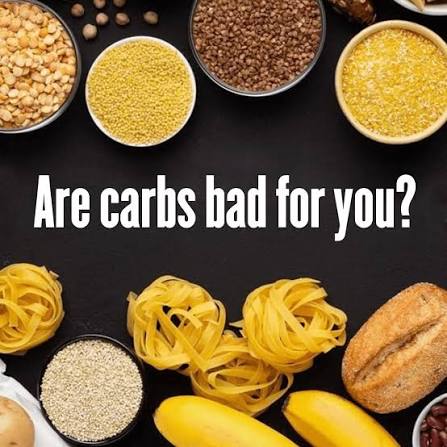
Carbohydrates have received a lot of criticism over the years.
You may have heard that carbs make you gain weight, that you should stop eating rice or roti if you want to lose weight, or that a “low-carb” diet is the only way to become fit.
But are carbohydrates really bad for you?
No.
Carbohydrates are an important source of energy and can absolutely be part of a healthy, balanced diet.
The problem isn’t carbohydrates themselves. What matters is the type of carbohydrate, the quantity you consume, your overall diet, and your individual nutritional needs.
So before you remove rice, roti, fruits, potatoes, or other carbohydrate-containing foods from your diet, let’s understand what carbohydrates actually do and why they don’t deserve to be treated as the enemy.
What Are Carbohydrates?
Carbohydrates are one of the three main macronutrients, along with protein and fat.
When you eat carbohydrates, your body breaks many of them down into glucose, which can be used as an energy source.
Carbohydrates are found naturally in many foods, including:
- Rice
- Roti
- Oats
- Potatoes
- Sweet potatoes
- Fruits
- Vegetables
- Beans
- Lentils
- Milk and some dairy products
They’re also found in foods such as:
- Biscuits
- Cakes
- Pastries
- Sweets
- Sugary drinks
- Many packaged snacks
This is important because not all carbohydrate-containing foods are nutritionally equivalent.
An apple and a sugary soft drink both contain carbohydrates, but they provide very different nutritional benefits.
Why Does Your Body Need Carbohydrates?
Carbohydrates are an important source of energy.
Your body can use different nutrients for energy, but carbohydrates are particularly useful for fueling physical activity and many everyday functions.
This is especially relevant if you exercise regularly.
Activities such as:
- Running
- Cycling
- Dancing
- Strength training
- Swimming
- Sports
- High-intensity workouts
can all increase your body’s need for readily available energy.
Carbohydrates can help provide that fuel.
This is one reason extremely low-carbohydrate diets aren’t necessarily the best choice for everyone.
Carbohydrates and Your Brain
Your brain also uses glucose as an important source of energy.
This doesn’t mean you need to eat sugar constantly to “feed your brain.”
Your body has mechanisms for maintaining blood glucose and can use other fuel sources when carbohydrate availability is low.
But carbohydrates remain an important part of many healthy eating patterns.
Rather than fearing them, it’s more useful to focus on choosing nutritious sources and appropriate portions.
Are Carbohydrates Responsible for Weight Gain?
This is one of the biggest carbohydrate myths.
Eating carbohydrates does not automatically cause body fat gain.
Weight gain occurs when you consistently consume more energy than your body uses over time.
As discussed in our previous SwasthFitness article about calories, carbohydrates can contribute to your overall calorie intake—but so can protein and fat.
A food doesn’t cause weight gain simply because it contains carbohydrates.
For example, foods such as fruits, oats, beans, and potatoes can all fit comfortably into a healthy weight-management diet.
The bigger issue is often how much you’re eating and what the overall diet looks like.
Why Do People Lose Weight Quickly When They Cut Carbs?
This is where some confusion comes from.
When people dramatically reduce their carbohydrate intake, they may see their body weight decrease relatively quickly at first.
But that doesn’t necessarily mean they’ve suddenly lost a large amount of body fat.
Carbohydrates are stored in the body as glycogen, and glycogen is stored along with water.
When carbohydrate intake drops significantly, glycogen stores can decrease, and some of the associated water can also be lost.
This can cause a noticeable change on the weighing scale.
However, a reduction in water weight is not the same thing as losing body fat.
This is one reason it’s important not to judge a diet solely by what happens on the scale during its first few days.
Simple vs. Complex Carbohydrates
You’ve probably heard people talk about “simple carbs” and “complex carbs.”
These terms can be useful, but they don’t tell the whole story.
Simple carbohydrates are generally made up of shorter chains of sugar molecules and are found naturally in foods such as fruits and milk, as well as in foods with added sugars.
Complex carbohydrates generally contain longer chains of sugar molecules and are commonly found in foods such as whole grains, legumes, and starchy vegetables.
But rather than simply asking whether a carbohydrate is “simple” or “complex,” it’s often more useful to look at the whole food.
For example, fruit contains naturally occurring sugars, but it also provides fibre, vitamins, minerals, and other beneficial compounds.
A sugary beverage, on the other hand, can provide a significant amount of sugar with little fibre and limited nutritional value.
So the better question isn’t:
“Is this a carb?”
It’s:
“What kind of food is providing these carbohydrates?”
Whole Grains vs. Refined Carbohydrates
One useful distinction is between whole grains and refined grains.
Whole grains retain more of the grain’s natural components and generally provide more fibre and nutrients.
Examples include:
- Oats
- Brown rice
- Whole-wheat grains
- Barley
- Millets
- Whole-grain breads
Refined grains have undergone processing that removes parts of the original grain.
Examples can include:
- White bread
- Refined flour products
- Many bakery products
- Some refined grain-based snacks
This doesn’t mean refined grains are “poison” or that you can never eat them.
The point is simply that making whole or minimally processed carbohydrate sources a regular part of your diet can be a nutritious choice.
What About Rice?
Rice is often one of the first foods people are told to eliminate when trying to lose weight.
But rice itself isn’t inherently unhealthy.
Rice is a staple food for millions of people around the world and can absolutely be part of a balanced diet.
The important factors include:
- Portion size
- Overall calorie intake
- What you eat with the rice
- Your individual nutritional needs
- The rest of your diet
For example, a meal containing rice, dal, vegetables, salad, and curd can provide carbohydrates, protein, fibre, vitamins, minerals, and other nutrients.
The problem isn’t simply:
“I ate rice.”
The bigger picture is what matters.
What About Roti?
The same principle applies to roti.
Roti can provide carbohydrates and, depending on the flour used, varying amounts of fibre and other nutrients.
Instead of automatically removing roti from your diet, think about building a balanced meal around it.
For example:
Roti + dal + vegetables + curd
can be a nutritious and satisfying combination.
If your goal is weight management, portion size and your overall dietary pattern matter much more than declaring roti “bad.”
Are Fruits Bad Because They Contain Sugar?
Absolutely not.
This is another common misunderstanding.
Fruit contains naturally occurring sugars, but it also provides:
- Fibre
- Vitamins
- Minerals
- Water
- Plant compounds
- Other beneficial nutrients
Whole fruits are therefore very different from foods and drinks that contain large amounts of added sugar.
For most people, fruit can be an excellent part of a healthy diet.
If you’re trying to lose weight, you generally don’t need to eliminate fruit simply because it contains carbohydrates or natural sugar.
What About Potatoes?
Potatoes sometimes get an unfair reputation because they’re carbohydrate-rich.
But potatoes can be a nutritious food.
They provide carbohydrates along with nutrients such as potassium and vitamin C.
The preparation method matters.
A boiled or roasted potato is nutritionally different from a potato that has been heavily fried and served with a large amount of high-calorie toppings.
Again, the question isn’t simply:
“Does this food contain carbs?”
Look at the entire meal.
Carbohydrates and Exercise
If you exercise regularly, carbohydrates can be particularly useful.
They provide energy that can support physical activity.
If you’ve ever felt unusually tired during a workout after severely restricting your food intake, insufficient carbohydrate or overall energy intake may be one possible factor.
This doesn’t mean you need a huge carbohydrate-heavy meal before every workout.
It simply means that carbohydrates have a legitimate role in sports and fitness nutrition.
For someone who exercises regularly, an appropriate amount of carbohydrates can be part of a well-designed diet.
How Much Carbohydrate Do You Need?
There isn’t one carbohydrate target that is perfect for everyone.
Your needs depend on factors such as:
- Age
- Body size
- Physical activity
- Fitness goals
- Total calorie intake
- Dietary preferences
- Overall health
- Training demands
Someone who spends most of the day sitting may have different energy requirements from someone who trains intensely for several hours a day.
That’s why copying another person’s diet isn’t necessarily a good idea.
Your carbohydrate intake should fit into your overall nutritional needs.
How to Choose Better Carbohydrate Sources
Instead of trying to eliminate carbohydrates, focus on improving the quality of the carbohydrates you regularly eat.
Good everyday options can include:
Whole grains
- Oats
- Brown rice
- Whole wheat
- Barley
- Millets
Legumes
- Dal
- Rajma
- Chana
- Chickpeas
- Beans
Fruits
Choose a variety of seasonal fruits.
Vegetables
Vegetables provide carbohydrates along with fibre, vitamins, minerals, and other beneficial compounds.
Starchy vegetables
- Potatoes
- Sweet potatoes
- Corn
- Peas
These can all fit into a balanced diet.
What About Sugary and Highly Processed Foods?
This is where reducing carbohydrate intake can sometimes be useful.
Foods such as:
- Sugary beverages
- Candies
- Cakes
- Pastries
- Biscuits
- Desserts
- Highly processed snack foods
can make it easy to consume a lot of calories without feeling particularly satisfied.
These foods don’t have to be completely forbidden.
But they are generally better treated as occasional or moderate choices, rather than the foundation of your everyday diet.
How to Build a Balanced Carb-Based Meal
Instead of eating carbohydrates by themselves, try pairing them with protein and other nutrient-rich foods.
For example:
Rice meal
Rice + dal + vegetables + curd
Roti meal
Roti + paneer/tofu/chicken + vegetables + salad
Breakfast
Oats + milk/curd + fruit + nuts or seeds
Snack
Fruit + curd
This approach can help make meals more satisfying and nutritionally balanced.
Common Carb Myths
Myth 1: “Carbs make you fat.”
False.
Eating more energy than your body uses over time can lead to weight gain. Carbohydrates are one source of that energy, but they aren’t uniquely responsible for weight gain.
Myth 2: “You should never eat rice if you want to lose weight.”
False.
Rice can be part of a weight-management diet.
Portion size and your overall diet matter.
Myth 3: “Fruit should be avoided because it contains sugar.”
False.
Whole fruits provide fibre, vitamins, minerals, and other beneficial nutrients.
Myth 4: “Eating carbs at night automatically makes you gain fat.”
False.
There is nothing magical about carbohydrates after sunset.
Your overall energy intake and dietary pattern matter more than the clock.
Myth 5: “All carbs are unhealthy.”
False.
Carbohydrates come from a wide range of foods, from fruits and vegetables to whole grains and legumes.
The nutritional quality of the food matters.
Should You Try a Low-Carb Diet?
Low-carbohydrate diets can work for some people.
If reducing carbohydrates causes you to consume fewer calories overall, you may lose weight.
But that doesn’t mean carbohydrates were inherently making you gain weight.
The important question is:
Can the diet provide adequate nutrition and can you realistically maintain it?
If eliminating rice, roti, fruit, or other foods makes your diet unnecessarily restrictive and difficult to follow, it may not be the right approach for you.
A sustainable diet should fit your culture, preferences, lifestyle, and nutritional requirements.
Don’t Fear Carbohydrates—Understand Them
One of the biggest problems with modern diet culture is that individual foods or nutrients are frequently labelled as either “good” or “bad.”
First it was fat.
Then carbohydrates.
Then sugar.
But nutrition isn’t that simple.
Your health isn’t determined by one nutrient.
It’s determined by your overall eating pattern, physical activity, sleep, lifestyle, and many other factors.
You don’t need to be afraid of carbohydrates.
You need to learn how to include them appropriately.
A Simple Rule for Everyday Eating
Instead of asking:
“Should I stop eating carbs?”
Try asking:
“Am I choosing mostly nutritious sources, eating appropriate portions, and building balanced meals?”
If the answer is yes, there’s a good chance carbohydrates can comfortably have a place in your diet.
A simple meal-planning approach is:
Protein + carbohydrate + vegetables/fruit + healthy fats
For example:
Dal + rice + vegetables + curd
or
Paneer + roti + vegetables + salad
or
Eggs + whole-grain toast + vegetables + fruit
These meals demonstrate that carbohydrates don’t have to be eaten in isolation.
The Bottom Line
Carbohydrates are not the enemy.
They are an important source of energy and can be part of a healthy diet.
The key is to focus on the quality and quantity of the foods you eat rather than eliminating an entire macronutrient.
Choose nutritious carbohydrate sources such as whole grains, fruits, vegetables, beans, lentils, and other minimally processed foods regularly. Limit excessive consumption of highly processed and sugary foods, while still allowing room for flexibility and enjoyment.
And if you’re trying to lose weight, remember:
You don’t need to give up rice.
You don’t need to give up roti.
You don’t need to give up fruit.
You don’t need to fear carbohydrates.
Instead, learn how to build balanced meals and create eating habits that you can maintain for the long term.
At SwasthFitness, we believe healthy nutrition isn’t about eliminating foods out of fear. It’s about understanding what your body needs and finding a sustainable balance between food, movement, and wellbeing.
Because healthy living isn’t about following the strictest diet.
It’s about building a lifestyle that works for you.
Nutrition · Fitness · Wellness — together, not separately.